Movie
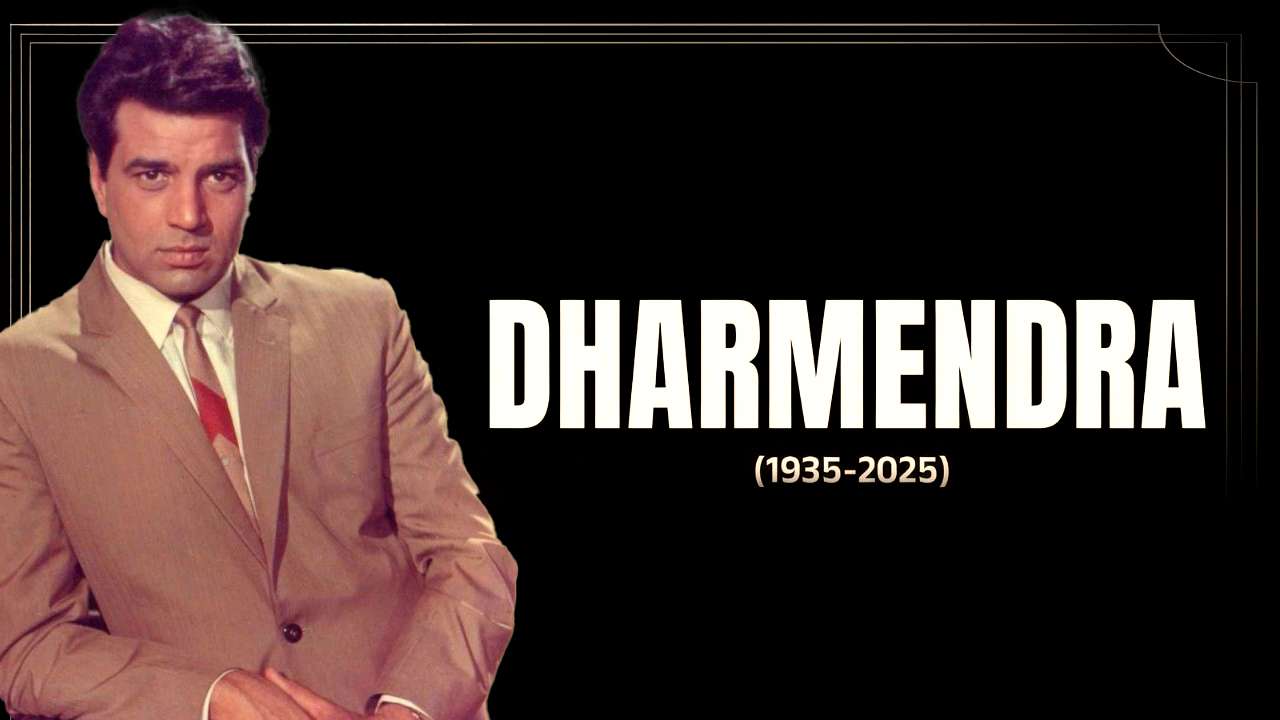
Dharmendra: The Last of the Lions

There are some names in Indian cinema that do not merely belong to film history —
they breathe inside the nation’s collective memory. Dharmendra Singh Deol was one of those names. A man who could be gentle as a monsoon drizzle and fierce as a Punjabi storm. A man who carried grace like a birthright and humility like a sacred vow. Today, as we remember him, we are not mourning only a film icon. We are mourning a chapter of Indian cinema that will never be written again.
The Handsome Hero Who Defined an Age
Long before the era of sculpted gym bodies and curated stardom, Dharmendraji arrived with a natural magnetism that needed no introduction.
He was “The He-Man of Bollywood,” yes — but he was also the man whose eyes carried poetry, longing, mischief, and an entire universe of emotion.
From Phool Aur Pathar to Anupama, from the raw energy of Sholay to the delicate tenderness of Chupke Chupke, Dharmendraji gave India heroes who were human, flawed, courageous, and irresistibly real.
Every generation has its own Dharmendra:
The romantic poet
The action titan
The comedic genius
The soulful partner on screen
The elder statesman with a heart full of warmth
He didn’t reinvent himself — he simply revealed more of who he was.
A Career Etched in Gold
Dharmendraji’s filmography reads like a syllabus in classic Indian cinema:
Sholay — where Veeru became folklore
Chupke Chupke — where comedy became artistry
Satyakam — where conscience became performance
Yaadon Ki Baaraat — where music became memory
Anupama — where silence became romance
He paired brilliantly with the greats: Meena Kumari, Hema Malini, Sharmila Tagore, and every leading actor of his time.
He carried a screen presence so dignified that even a quiet glance felt like a line of dialogue.
The Man Behind the Star
For all the applause, all the stardom, and all the mythology around him, he remained astonishingly simple.
Dharmendraji loved:
His farm
His poetry
His people
His memories
And the craft that gave him a voice in millions of homes
He was the kind of star who didn’t walk into a room demanding attention —
attention found him, bowed to him, and stayed.
To the younger generation of actors, he was a gentle elder.
To fans, he was a timeless hero.
To cinema, he was an unshakeable pillar.
A Legacy That Will Never Fade
Even as new waves and new stars rose, Dharmendraji remained eternal.
Because legends like him aren’t made by trends — they’re made by truth.
He gave Indian cinema:
Its golden standard of masculinity — strength with softness
Its template for heroic charm
Its enduring warmth
Its poetry
And he gave the audience one more thing:
A reason to fall in love with movies.
His passing is not just the end of a cinematic chapter —
it is the dimming of a star that lit the way for millions.
But legends do not disappear.
They live in reels, in memories, in black-and-white frames, in songs, in the quiet places of the human heart.
A Final Salute
Dharmendraji once said,
“Cinema is my temple, and the audience is my God.”
Today, the audience bows back.
We honor the man who gave us laughter, courage, passion, romance, and stories we will tell for generations.
A gentle giant.
A poet-warrior.
A hero who asked for nothing but gave us everything.
Rest in eternal light, Dharamji.
Your legacy is carved into the soul of Indian cinema.
You will always be our Veeru… our poet… our hero.


Pixar’s “Hoppers” Is a Wild, Eco-Sci-Fi Comedy That Recaptures the Studio’s Playful Spirit

First Hunts are the Worst

Sacred Heart Gets Older, Wiser… and Nostalgic

Iron Man The Risk That Built an Empire
Hero or Hollywood Satire? Why Wonder Man Isn’t What You Expect

Paging Sacred Heart! Our Top 5 Scrubs Reboot Predictions
Sacred Heart Gets Older, Wiser… and Nostalgic

Peaky Blinders: The Immortal Man
Hero or Hollywood Satire? Why Wonder Man Isn’t What You Expect
Iron Man The Risk That Built an Empire