Movie
MrBeast Meets Ramayana: Global Marketing Masterstroke—or a Collision of Values?

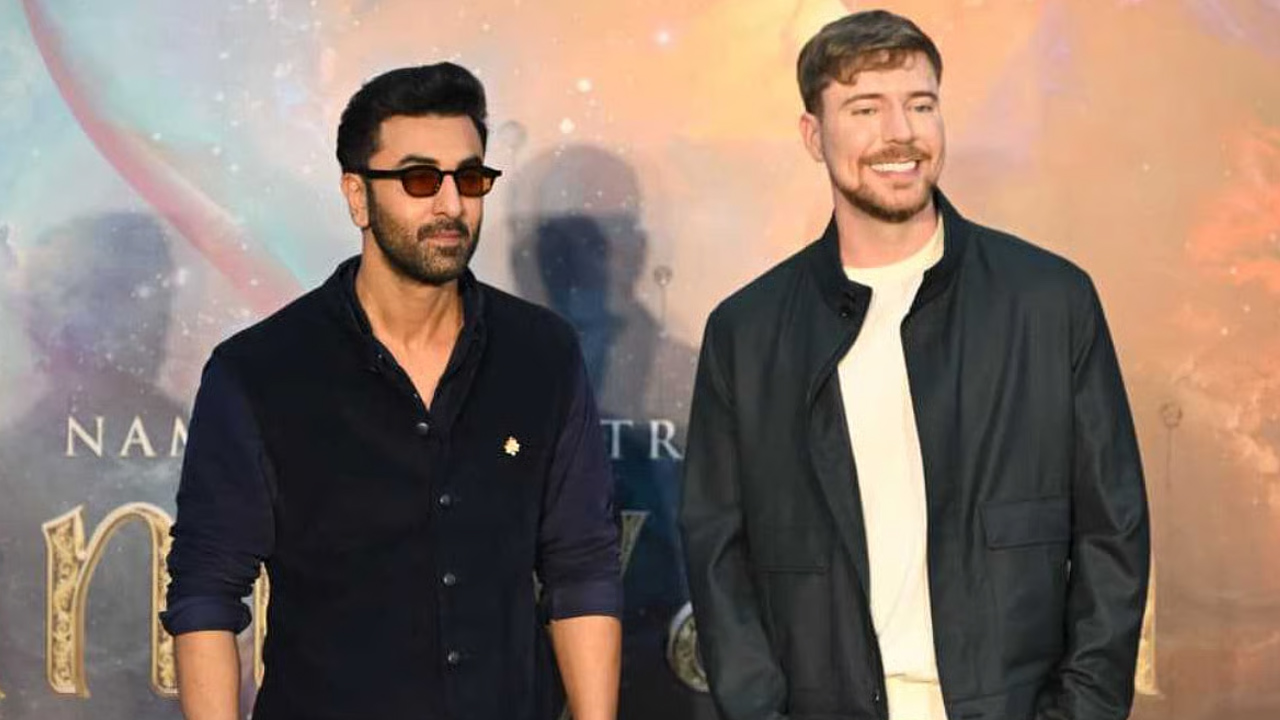
When MrBeast stepped onto the stage alongside Ranbir Kapoor, Sai Pallavi, Ravi Dubey, and director Nitesh Tiwari at a special Ramayana event in Mumbai, the images immediately achieved what the filmmakers wanted: people started talking.
But beyond the photographs and social-media excitement, the collaboration raises a more important question: What exactly is MrBeast doing in the world of Ramayana?
The event took place at DNEG/Prime Focus, the company behind the film’s extensive visual-effects work. Ramayana is being released as a two-part cinematic saga, with the first installment scheduled for November 2026 and the second planned for 2027.
This was not simply an American YouTuber dropping by a Bollywood gathering. It was a calculated collision between two enormous cultural forces: one of India’s most sacred and enduring stories, and one of the most powerful personalities in modern digital entertainment.
What MrBeast Represents
Jimmy Donaldson, better known as MrBeast, is not a traditional movie star. He represents something potentially more valuable to marketers: direct access to the generation that spends more time on YouTube, Shorts, and social media than it does watching traditional television.
His brand is built on scale—bigger prizes, bigger spectacles and bigger emotional reactions. His videos turn simple ideas into international events engineered to capture attention within seconds.
To many young viewers, MrBeast represents generosity, ambition and the possibility of building a global media empire outside Hollywood’s traditional system. His highly produced competitions, giveaways and philanthropic projects have made him one of the world’s most influential digital entertainers.
But his name also carries mixed connotations. His company and Beast Games have faced allegations concerning working conditions, contestant treatment, and production safety. Those allegations remain disputed and subject to litigation, but they have complicated the clean-cut image of the generous internet hero.
That complexity cannot simply be ignored when his public image is placed beside a story carrying profound spiritual importance for millions of people.
Why Invite Him?
The most obvious answer is global reach.
The producers of Ramayana have repeatedly made clear that they do not want this film perceived only as a domestic Indian production. They are positioning it as a worldwide cinematic event—India’s answer not merely to another mythological film, but to franchises and epics such as The Lord of the Rings and Gladiator.
The reported combined investment in the two films may reach hundreds of millions of dollars. Producer Namit Malhotra has described the project as bringing together the best of Eastern storytelling and Western filmmaking for an international audience.
In that context, MrBeast is not merely a celebrity guest. He is a distribution channel disguised as a personality.
One appearance, interview, or video involving MrBeast can place Ramayana in front of millions of young viewers who may not follow Indian film news, recognize its stars, or understand the cultural significance of the epic. His participation tells Western audiences: “This is not a niche foreign-language release. This is an event you are expected to know about.”
It also allows the filmmakers to bypass traditional media gatekeepers. Hollywood press coverage can be expensive, cautious, and difficult for Indian productions to penetrate. MrBeast offers something different: immediate, borderless and algorithm-driven visibility.
That is genuine marketing intelligence.
Visibility Is Not the Same as Understanding
The danger is that the collaboration could reduce a sacred narrative to another viral moment.
The Ramayana is not simply intellectual property waiting to become a franchise. For generations of Indians, it has been intertwined with religion, ethics, family, sacrifice, leadership, and the meaning of dharma. Its characters are not viewed only as dramatic entertainment figures.
MrBeast’s content operates through speed, exaggeration and instant gratification. The Ramayana asks audiences to contemplate duty, restraint, devotion and moral consequence.
That contrast does not automatically make the partnership inappropriate. In fact, the unexpected pairing may be precisely why it works. Marketing thrives on contrast. However, the filmmakers must be careful that spectacle does not become the message.
If MrBeast is present only to pose for photographs, repeat a devotional phrase, and generate trending clips, then the appearance risks looking transactional—another example of Indian cinema seeking Western validation for something that was already globally important.
India does not need an American YouTuber to certify the value of the Ramayana.
But if the collaboration is used to introduce international audiences to the story—its philosophy, emotional stakes, and cultural meaning—then it becomes something far more significant. It becomes a bridge.
What Does This Mean to Indian Audiences?
There will not be one universal Indian reaction.
Some viewers will see the appearance as proof that Indian cinema has entered a new era—one in which Hollywood and the global creator economy must come to India rather than waiting for India to seek their approval.
Others may understandably feel protective. They may question whether the presence of a controversial internet celebrity trivializes a sacred epic or transforms spiritual heritage into a marketing accessory.
Both responses are legitimate.
The responsibility lies with the filmmakers to demonstrate that global ambition does not require cultural dilution. International audiences should be invited into the world of the Ramayana, but the story should not be reshaped merely to fit the attention span of an algorithm.
Show of Face or Marketing Genius?
At this stage, it is both.
As a publicity moment, the appearance was undeniably effective. MrBeast generated curiosity among people who might otherwise never click on a conventional Ramayana trailer. The photograph itself became the first piece of marketing: an image designed to provoke surprise, debate, and sharing.
But the difference between a publicity stunt and marketing genius will be determined by what happens next.
Does MrBeast create meaningful content around the film? Does he help introduce the epic to viewers unfamiliar with Indian culture? Is there a creative campaign, challenge, or philanthropic effort that reflects the values of service, courage, and duty found in the story? Or was the entire collaboration designed to produce a few viral photographs?
A face creates attention. A strategy converts that attention into interest, understanding and ticket sales.
The Mumbai event successfully created attention. Now the Ramayana team must prove that it has a strategy worthy of the story it is telling.
The real victory will not be making the world recognize MrBeast standing beside the cast. It will be making millions of young viewers understand why the Ramayana has endured for thousands of years—and why its message still matters.


MrBeast Meets Ramayana: Global Marketing Masterstroke—or a Collision of Values?

In four weeks, look fear in the face

Scared Straight? Leviticus; When Supernatural Meets Real Life Horror

Ray Gunn

The Geekiest Weekend in Glasgow!

Telugu Cinema Goes Direct to U.S. Fans: Nani and Anirudh Ravichander Bring The Paradise to Dallas

Tim Curry and Visibility

Viola Davis to Receive Gregory Peck Award at San Diego International Film Festival’s 25th Anniversary Night of the Stars
The Sheep Detectives
He will change the way you see the world